


Symptoms indicating the presence of parasites in the human body are not specific.Furthermore, they are different in the acute and chronic stages of the disease.How to recognize them?
The invasion of parasites into the human body has always been and remains one of the most pressing issues in medicine.Despite the fact that the level of health literacy of the population is constantly growing, the number of people suffering from the presence of parasites in the body does not decrease.Furthermore, due to the development of transport links and population migration, new types of parasites constantly appear that were previously absent.As a result, new symptoms appear that indicate the presence of helminths in the human body.In addition, parasites living in the child's body require special attention.Let's try to understand when it is necessary to pay attention to your health and consult a specialist.
Classification of parasites
There are many species of parasites in the world, but not all of them are adapted to life in our climate.Therefore, in this article we will consider the classification and symptoms of only the most common parasites.Scientists divide all worms that can parasitize the human body into several groups.
Based on their biological characteristics, parasites are divided into:
- Roundworms or roundworms (pinworms, roundworms, whipworms, hookworms, intestinal eels, trichinella).
- Tapeworms or tapeworms (pig tapeworm, bovine tapeworm, dwarf tapeworm, cysticercus, broad tapeworm, alveococcus, echinococcus).
- Trematodes (liver, lung, feline, lanceolate, blood).
- Unicellular parasites (amoeba, lamblia, balantidium).
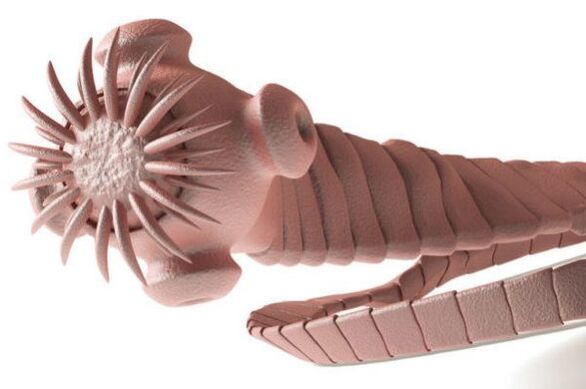
According to the characteristics of their life cycle, the following parasites are distinguished:
- Biohelminths require intermediate hosts to go through several developmental stages.A sexually mature individual, capable of reproducing, lives in the body of the definitive host.
- Geohelminthes: the eggs mature and spread in the soil.
- Contagious helminths are transmitted directly from person to person.
According to the habitat in the body, it can be divided as follows:
- Cavity: Parasite in the intestine and other organs of the cavity, for example, bile ducts, bladder.
- Tissue: parasite in internal organs and parenchymal muscles, i.e. outside the intestine.
Clinical picture of helminthiasis
What signs should you pay attention to?Conventionally, the course of helminthiasis can be divided into two phases: acute and chronic.The acute phase develops immediately after the parasite has "settled" in the human body and lasts from two weeks to two months.
Acute phase
The symptoms of this phase are due to the body's general response to the penetration of foreign proteins, i.e. to allergic mechanisms.The following syndromes come to the fore:
- intoxication;
- articulate;
- dermatological;
- catarrhal;
- bronchopulmonary;
- hepatolienal;
- abdominal;
- cerebral.

Intoxication syndrome is characterized by increased body temperature, chills, sweating, general weakness and muscle pain.The child may feel anxious, cry for no reason and sleep little.Swelling of the peripheral lymph nodes often occurs.
Given the non-specificity of symptoms, patients are in no hurry to consult a doctor, considering the complex of symptoms as the initial stage of ARVI.But even if parents seek advice because their child has a high fever, not all pediatricians suspect the presence of parasites in the body at this stage.
Joint damage presents as a type of reactive arthritis, due to the presence in the human body of proteins similar in structure to parasite proteins.Antibodies produced in response to the penetration of the pathogen affect not only it, but also tissues similar to it in structure.Patients complain of severe joint pain, swelling, redness and increased local body temperature.
The skin lesions appear as allergic dermatitis and are characterized by itching and the appearance of various skin rashes.In some patients the rash is very pronounced, but there are others who do not notice it.
Catarrhal syndrome is accompanied by symptoms of a runny nose, conjunctivitis and sore throat.Bronchopulmonary signs include a prolonged cough with sputum production, bronchial asthma attacks, the clinical picture of pneumonia and pleurisy.
In almost all types of helminths, the liver and spleen become enlarged.But these organs pay special attention when Giardia, Echinococcus and liver flukes settle in the human body.So patients complain of:
- bitterness in the mouth;
- pain and heaviness in the right hypochondrium;
- yellowing of the skin and mucous membranes.
Abdominal syndrome can be very pronounced in a child of preschool or primary school age.Nausea, vomiting, diarrhea and abdominal pain are observed.These symptoms are often the cause of misdiagnosis, when helminthiasis is considered acute intestinal intoxication.
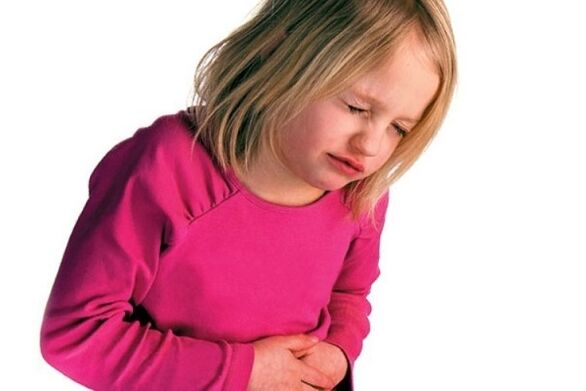
Cerebral manifestations are moderate and are characterized by headache, dizziness and reduced performance.
The severity of the above symptoms in both an adult patient and a child may vary.It depends on the strength of the immune system.Furthermore, the severity of the immune response depends on the morphological form in which the parasite is present in the organism.The greatest amount of antibodies is synthesized in response to the penetration of the larvae.
Over time, the strength of the immune response weakens and the disease becomes chronic.In this case, it can last for years, since its symptoms are mild and many simply do not pay attention to them.
Chronic phase
At this stage the symptoms, or more precisely their severity, are largely determined by the following factors:
- type of parasites that have entered the body;
- number of parasitic individuals;
- location of parasites in the body of an adult or child.
If the helminth is “armed” with suckers, hooks, spikes or sharp plates, these mechanically damage the site of localization, causing inflammation.
Volumetric formations that form as a result of the vital activity of helminths can compress nearby structures.Furthermore, if it is a vital organ, for example the brain, the consequences can be disastrous.
Since the parasite feeds on substances intended for the host's body, the latter develops anemia, hypovitaminosis and protein deficiency.
To survive in the human body, parasites severely suppress the immune system.As a result, susceptibility to viral and bacterial diseases increases;they tend to have a severe and protracted course, the development of complications, the formation of chronic forms and an asymptomatic course.

Characteristics of some helminthiases
Some helminthiases have characteristic symptoms that allow them to be distinguished from other diseases.
- A child suffering from enterobiasis will experience itching in the anus in the evening and at night.
- Massive whipworm infestation causes hemorrhagic colitis.
- Roundworms can cause intestinal obstruction, obstructive jaundice, and pancreatitis.
- The hookworm, feeding on the host's blood, is the cause of severe iron deficiency anemia.
- The presence of tapeworms can be diagnosed by a very specific disorder: the passage of segments of the parasite independently or during defecation.
- The urinary schistosome, which lives in the human body, is characterized by the appearance of a drop of blood at the end of urination.
- Fillariasis affects the eyes.
Due to the presence of the liver fluke, the patient develops chronic hepatitis, cholecystitis and cholangitis.Such patients complain of pain and heaviness in the right hypochondrium, bitterness in the mouth, yellowing of the skin and mucous membranes.The same disorders are characteristic of giardiasis.Even after effective treatment, phenomena such as biliary dyskinesia often persist.
Echinococcus, alveococcus, cysticercus do not reveal their presence in any way until a cyst forms in the affected organ.Sometimes it can reach quite large sizes and, as a rule, is diagnosed by mistake.Cysticercosis of the central nervous system is characterized by a variety of symptoms due to the location of the cysts.
Conclusion
As can be seen from the above, the clinical picture of the presence of worms is very diverse.They are easily confused with other diseases, especially when the patient adheres to the basic rules of personal hygiene in everyday life.If you notice suspicious symptoms that have no explanation, do not delay a visit to the doctor.Competent advice will help you avoid many problems in the future.